
 English
 中文
中文

вращающееся соединение
A rotary joint is a mechanical device designed to transfer fluids, gases, or sometimes electrical signals from a stationary source to a rotating part of a machine. It plays an important role in many industrial systems where continuous rotation is required while maintaining a reliable connection between fixed and moving components. By allowing media to pass through a rotating interface, a rotary joint helps equipment operate smoothly, efficiently, and safely.The basic structure of a rotary joint usually includes a rotating housing, a stationary inlet, sealing components, bearings, and internal flow passages. The stationary side connects to the supply line, while the rotating side connects to the moving equipment such as a drum, roller, spindle, or shaft. As the system rotates, the joint maintains a sealed path so the medium can flow without leakage. Depending on the application, the medium may be steam, water, oil, hydraulic fluid, air, coolant, or other process substances.One of the most important functions of a rotary joint is sealing. Since the device operates under rotation, the seal must prevent leakage while minimizing friction and wear. High-quality sealing elements are essential for stable performance, long service life, and reduced maintenance. Bearings are also crucial because they support smooth rotation and reduce mechanical stress on the joint. In many designs, the combination of precision machining, durable materials, and advanced sealing technology ensures dependable operation under demanding conditions.Rotary joints are widely used in industries such as paper making, textiles, plastics, steel production, food processing, printing, and chemical processing. In paper and printing machinery, they are commonly used to transfer steam, water, or thermal oil to heated rolls. In textile and plastic equipment, they help control temperature during processing. In industrial machinery, they may be used for cooling, heating, washing, or lubrication. Their versatility makes them valuable in many continuous production environments.Different types of rotary joints are available to suit specific operating conditions. Some are designed for low pressure and low speed applications, while others are built for high pressure, high temperature, or high-speed rotation. There are also single-passage and multi-passage models, depending on whether one or multiple media must be transferred at the same time. Material selection is another important factor. Stainless steel, brass, aluminum, and special alloys may be used based on corrosion resistance, strength, and temperature requirements.Proper installation and maintenance are important for reliable performance. The joint should be aligned correctly and operated within the recommended pressure, temperature, and speed limits. Regular inspection of seals, bearings, and connections can help prevent unexpected failure and extend service life. If maintained properly, a rotary joint can provide efficient and stable operation for a long time.In summary, a rotary joint is a key component that enables the transfer of media between stationary and rotating parts. Its ability to combine rotation with controlled flow makes it essential in many modern industrial applications.
продукт
классификация:
-
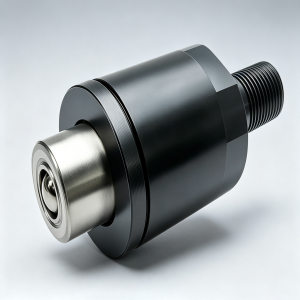
Опора подшипника со стороны ролика
Их классификация: Нестандартный подшипникмнения: 79номер:Время выпуска: 2026-07-05 17:17:57Поворотное соединение и опорный узел концевого подшипника ролика обеспечивают точное радиальное позиционирование и осевое ограничение валков, поглощают ударные нагрузки, поддерживают высокоточное выравнивание валков, предотвращают утечку охлаждающей жидкости и поддерживают стабильную долгосрочную работу правильных машин и отжимных устройств.
новости
классификация:
Нет результатов поиска!
случай
классификация:
Нет результатов поиска!
видео
классификация:
Нет результатов поиска!
скачать
классификация:
Нет результатов поиска!
вербовка
классификация:
Нет результатов поиска!
Рекомендуемые продукты
Нет результатов поиска!


